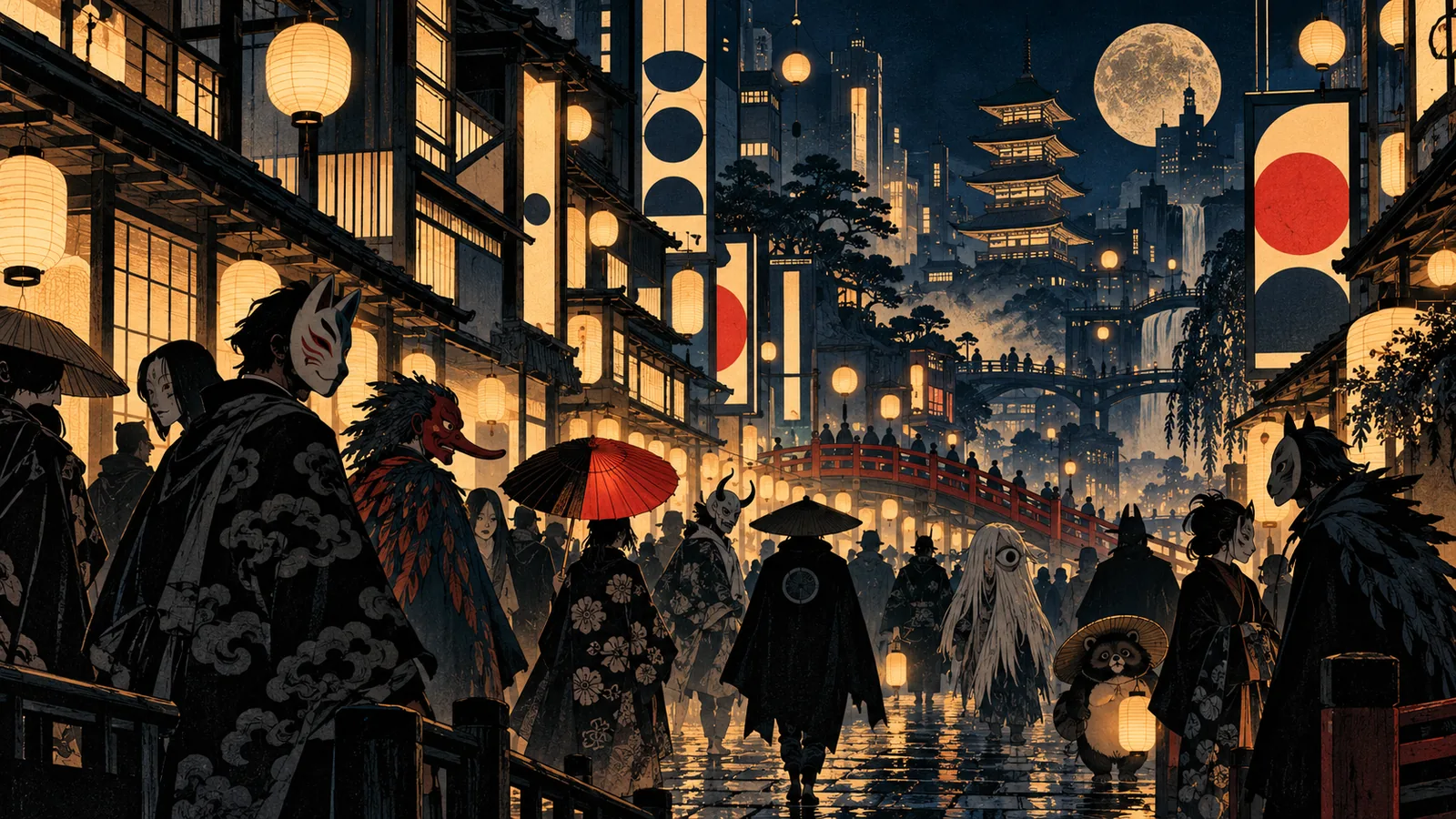
The core answer: Unlike North American Halloween—which revolves around neighborhood trick-or-treating for children—Halloween in Japan developed almost exclusively as a creative exhibition for adults and young adults centered on elaborate cosplay, photography, and urban street gatherings. Introduced commercially through Tokyo toy stores in the 1980s and crystallized by Kanagawa’s pioneering Kawasaki Halloween Parade in 1997, Japan embraced Halloween because it tapped directly into pre-existing cultural passions for disguise, seasonal food packaging, and collective costume craftsmanship.
From quiet suburban beginnings to internationally televised street scenes in Shibuya, here is how Japan transformed a foreign harvest tradition into an unmistakable pop-cultural phenomenon.
1. The Four Eras of Halloween in Japan
The domestic reception of Halloween unfolded across four distinct phases over forty years.
1. The Commercial Introduction (1970s–1980s)
Japan’s initial exposure to Halloween merchandise originated at Kiddy Land, a flagship toy and novelty emporium in Tokyo’s Harajuku district. After stocking imported Halloween novelties for foreign expatriates in the late 1970s, Kiddy Land organized Japan’s first recognized public Halloween parade in October 1983 along Omotesando Avenue. Approximately one hundred costumed participants—predominantly international families and neighborhood children—walked the boulevard.
2. The Creative Spark: Kawasaki Halloween (1997–2019)
The event that definitively shifted Halloween from a niche curiosity to an adult artistic arena was the launch of Kawasaki Halloween (Kawa-Hallow) in 1997 outside Kawasaki Station. Conceived to revitalize local commercial districts, the event featured a high-stakes costume competition judged on sculptural ingenuity and theatrical makeup. Over two decades, Kawasaki became a pilgrimage site for prop builders, special effects artists, and serious cosplayers, drawing over 100,000 spectators at its peak.
3. Theme Park Mainstreaming (Late 1990s–2000s)
In 1997, Tokyo Disneyland launched its first seasonal Halloween promotion, followed shortly by Universal Studios Japan in Osaka. Theme parks normalized Halloween as an essential autumn calendar event alongside Valentine's Day and Christmas, introducing themed menus, spooky parades, and family-friendly seasonal decor across nationwide department stores.
4. The Spontaneous Shibuya Phenomenon and Maturation (2010s–Present)
With the ubiquity of smartphones and visual social media platforms in the early 2010s, Tokyo’s Shibuya Scramble Crossing evolved into an impromptu, non-ticketed street assembly on October 31. Thousands gathered simply to display costumes, take photos, and experience the crowd energy. In recent years, local ward authorities have instituted crowd-safety regulations and alcohol bans to balance urban safety with celebratory expression, prompting many celebrations to decentralize toward ticketed indoor venues, themed cafes, and virtual spaces.
2. Comparing Japanese and Western Halloween Traditions
| Cultural Element | Traditional Western Practice (US/UK) | Modern Japanese Practice |
|---|---|---|
| Primary Participants | Children and elementary-age youth | Teens, university students, and adult creatives |
| Signature Activity | Door-to-door Trick-or-Treating | Street cosplay display, photoshoots, themed dining |
| Costume Aesthetics | Classic monsters, horror tropes, licensed pop icons | Intricate handmade costumes, anime, video games, humorous jimi concepts |
| Domestic Consumption | Carving pumpkins, home decorating | Seasonal pumpkin (kabocha) and sweet potato pastries |
| Social Context | Neighborhood community bonding | Public space transformation and peer social media sharing |
3. The Phenomenon of "Jimi Halloween" (Mundane Halloween)
In 2014, a Japanese web collective hosted the first Jimi Halloween (地味ハロウィン, literally "Subdued" or "Mundane" Halloween). Tired of competing with multi-thousand-dollar armor and glamorous costumes, participants dressed as hyper-specific, relatable characters observed in everyday modern life:
- "A person whose glasses fogged up after eating hot ramen"
- "Someone who stepped out to the convenience store and regrets their footwear"
- "The assistant director holding the countdown clipboard on live television"
The concept went viral worldwide, demonstrating Japan’s distinctive genius for observational humor and subtle narrative cosplay without requiring exorbitant budgets or gore.
4. Why Disguise Resonates in Japanese Culture
Anthropologists frequently observe that Japanese society embraced Halloween with unique fervor because the act of adopting a secondary identity (yatsushi) has deep historical roots in domestic festivals.
During Edo-period pilgrimage manias (okage mairi) and seasonal Bon Odori dances, strict hierarchical social roles were temporarily suspended. Townspeople dressed in theatrical attire, sang, and danced through market streets under the safety of a collective celebration. Halloween offers an analogous valve for contemporary urban workers: one evening where formal company guidelines and routine behavioral expectations can be set aside in favor of whimsical, handcrafted fantasy.
5. From Street Monsters to Ancient Spirits
Whether painting one's face as a skull or wearing a cardboard illusion costume, the desire to step outside oneself and touch the fantastical is universal.
In Yokaizen, that same fascination with transformation and folklore comes alive in an interactive format. Through authored manga stories shaped by Japanese bestiaries, readers encounter yokai that mirror internal moods and human quirks, offering a reflective literary space long after the city street parades have packed away their masks.
Frequently Asked Questions
Q. Do children go trick-or-treating in Japanese residential neighborhoods?
A. Generally no. Walking up to private residential doorsteps to ask for candy is considered an infringement on neighborhood privacy and noise customs in Japan. However, commercial shopping arcades (shotengai), preschools, and private English learning centers frequently host organized, pre-registered candy walks where local shopkeepers distribute treats.
Q. Is public drinking allowed during Halloween in Shibuya?
A. No. Due to past overcrowding incidents and safety concerns, Shibuya Ward ordinances strictly prohibit the consumption of alcoholic beverages on public streets, parks, and around Shibuya Station during the peak Halloween period (late October). Visitors are advised to check current ward guidelines before attending.
Q. What does "Kabocha" mean on Japanese autumn menus?
A. Kabocha is Japanese squash/pumpkin. During September and October, Japanese bakeries, cafes, and convenience stores release limited-edition seasonal delicacies flavored with kabocha, roasted purple sweet potato (murasaki imo), and sweet chestnut (kuri), making autumn the most active season for confectionery releases.
Sources
- https://www.city.kawasaki.jp/ (Kawasaki City Archives, Regional Cultural Events)
- https://dl.ndl.go.jp/pid/1288339 (National Diet Library, Toriyama Sekien 'Gazu Hyakki Yagyō')