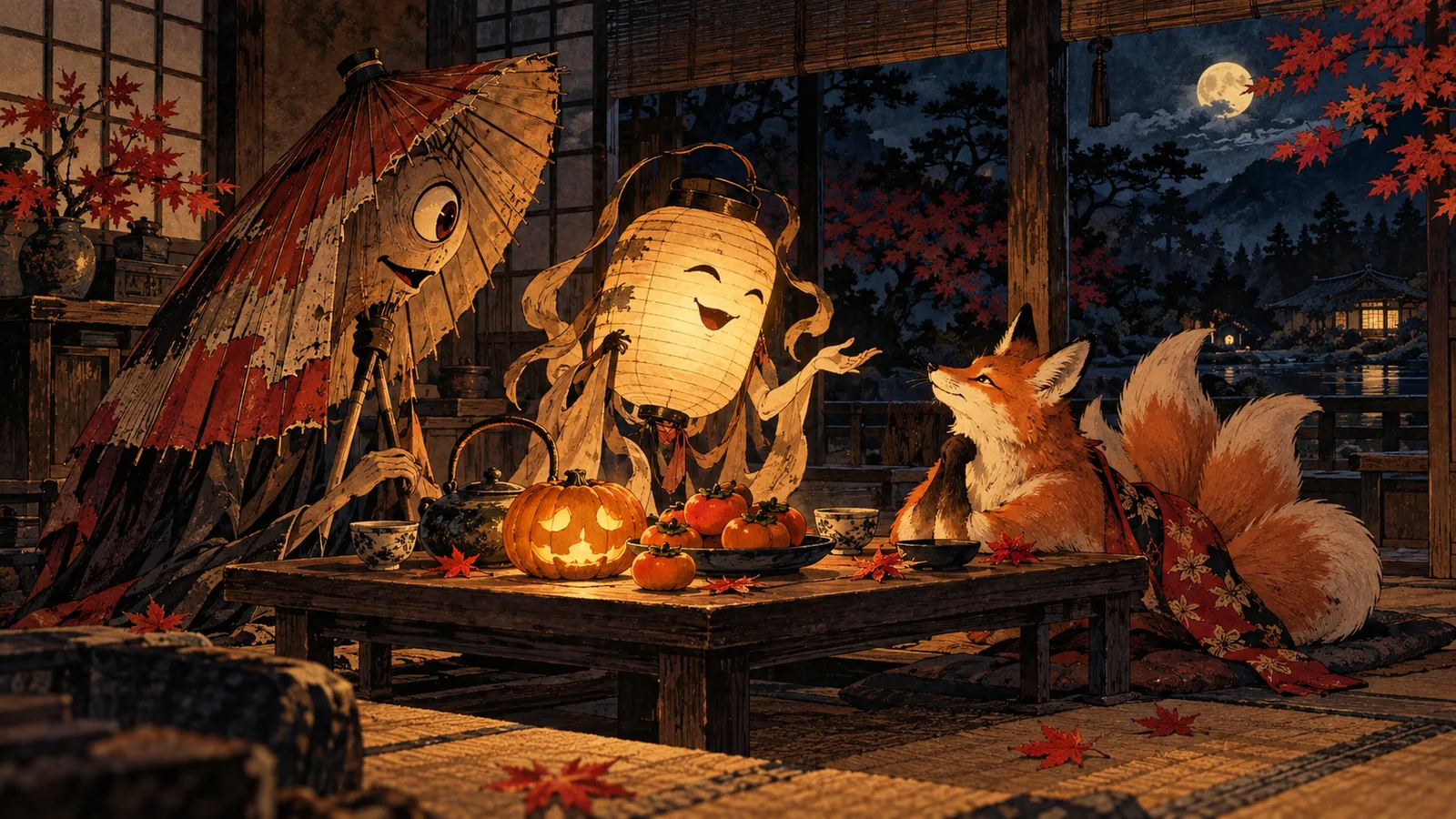
The core answer: Celebrating Halloween with Japanese yokai transforms October 31 from a commercial jump-scare holiday into an atmospheric, story-driven autumn evening centered on classical Edo-period bestiaries, animist household spirits (tsukumogami), and lanterns that honor the seasonal shift toward winter.
Instead of synthetic plastic skeletons and gore, incorporating Japanese folklore invites a poetic appreciation for shadows, folklore, and the supernatural creatures that ancient storytellers created to explain the mysteries of the night.
1. Why Yokai Bring Depth to Autumn Evenings
In Japanese animism and Shinto belief, the world is populated by countless spirits (kami and yokai) inhabiting mountains, rivers, and weathered domestic objects.
Beyond Good and Evil
Unlike Western horror creatures, which are often framed as irredeemably demonic, yokai exist in moral ambivalence. They can be mischievous, protective, tragic, or comical:
- Kasa-obake (Paper Umbrella Spirit): A one-legged umbrella with a single eye that hops around on windy nights, reminding humans not to neglect daily tools.
- Yuki-onna (The Snow Woman): An ethereal spirit heralding winter frost, carrying tales of broken promises and serene beauty.
- Chochin-obake (Lantern Ghost): A split paper lantern with a flickering tongue, casting warm, dancing shadows rather than terror.
2. Four Ways to Experience Yokai on Halloween Night
Bringing Japanese folklore into your seasonal celebrations is simple and rich in atmosphere:
1. Paper Lanterns Over Plastic Skulls
Replace harsh strobe lights with soft washi paper lanterns (chochin). Dim amber lighting honors the tradition of Hyakumonogatari Kaidankai (the Edo gathering of 100 ghost tales), where candles were extinguished one by one as each uncanny story concluded.
2. Autumn Tea and Sweet Seasonal Offerings
Ancient autumn festivals in Japan celebrated seasonal harvests. Pairing warm roasted green tea (hojicha) with roasted sweet potatoes (yaki-imo) or chestnut confections mirrors the traditional harvest offerings placed outside rural homes.
3. Storytelling Rituals
Read historical translations of Lafcadio Hearn’s Kwaidan (1904) or Toriyama Sekien's 18th-century woodblock prints aloud. The beauty of these tales lies in their quiet suspense and emotional resonance.
3. Comparing Western Halloween and Yokai Autumn Themes
| Dimension | Standard Commercial Halloween | Japanese Yokai Seasonal Gathering |
|---|---|---|
| Primary Atmosphere | Startling shocks, gore, and loud parties | Quiet twilight, wind in the trees, and subtle mystery |
| Material Aesthetic | Molded plastics, synthetic cobwebs | Washi paper, bamboo lanterns, autumn leaves, ceramic tea ware |
| Relationship with Spirits | Ward off evil or enact cinematic horror | Acknowledge nature's changes and coexist with unseen forces |
| Culinary Focus | Processed corn syrup candy | Roasted chestnuts, kabocha squash, matcha, seasonal persimmons |
4. Reconnecting with the Quiet Magic of the Dark
As modern cities erase physical darkness with relentless LED glare, we lose touch with the contemplative stillness that earlier generations experienced every autumn.
Yokaizen is an AI Life RPG set in this world of Japanese yokai: anime companions who call you by your chosen name, and webtoon stories that change with what you actually do.
Frequently Asked Questions
Q. What is the gathering of 100 ghost stories (Hyakumonogatari Kaidankai)?
A. It was a popular parlor game during Japan's Edo period. Participants gathered at night in a room lit by 100 blue paper lanterns. After each person recounted a ghostly tale, one wick was snuffed out. As the room grew progressively darker, tension mounted until total pitch-blackness arrived at story one hundred.
Q. Are there specific yokai associated exclusively with autumn?
A. Yes. Creatures like the Tsurube-otoshi (a giant head dropping from autumn trees in the sudden dusk) and seasonal harvest spirits represent the rapid shortening of daylight and the chill of falling leaves.
Q. Can I decorate my home with yokai illustrations respectfully?
A. Absolutely. Historical Edo-period prints by artists like Toriyama Sekien and Tsukioka Yoshitoshi are public-domain cultural treasures. Displaying prints of tsukumogami or forest spirits honors their artistic and historical significance.
Sources
- https://en.wikipedia.org/wiki/Yokai (Yōkai: history, Sekien's catalogues, tsukumogami)
- https://en.wikipedia.org/wiki/Gazu_Hyakki_Yagy%C5%8D (Gazu Hyakki Yagyō, Toriyama Sekien, 1776)
- https://en.wikipedia.org/wiki/Kwaidan:_Stories_and_Studies_of_Strange_Things (Lafcadio Hearn, Kwaidan, 1904)